Supplements & fertility: vitamin D, CoQ10, folate, DHEA
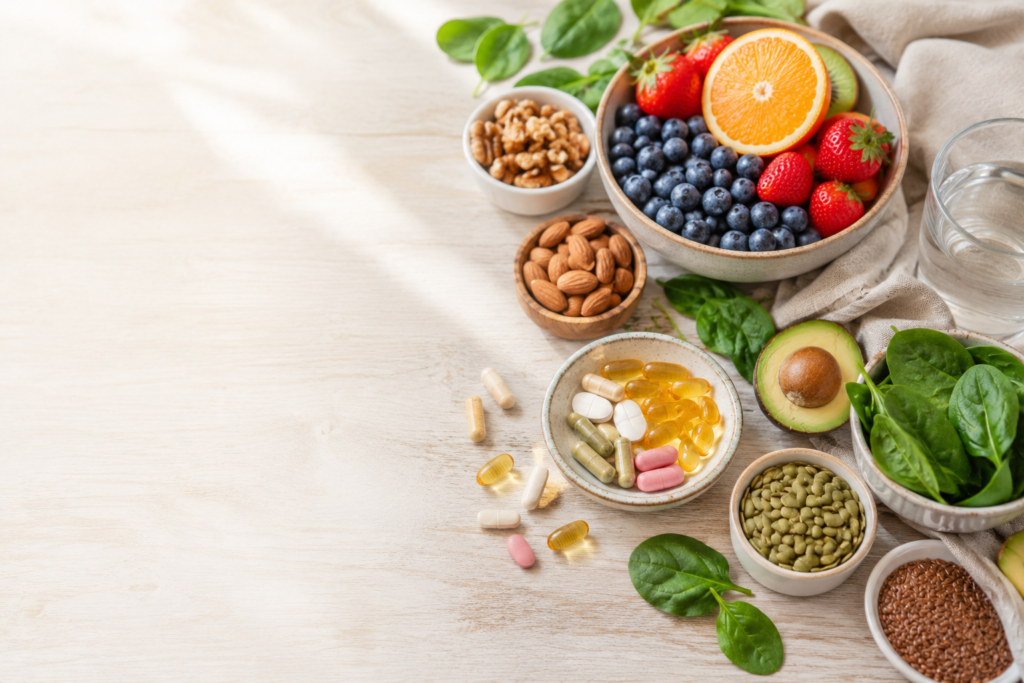
Pharmacy shelves and the internet are full of “fertility supplements”, often with big promises and little evidence. It is understandable that many couples want to do something active while they try — and supplements look like an easy answer.
The truth is more nuanced: very few supplements have a clear, proven benefit, some are worthwhile in specific situations, and many offer little more than hope and cost. Let us look at them one by one, based on the data.
Which supplement is genuinely essential?
Folic acid. Every woman trying to conceive should take at least 400 micrograms of folic acid a day, ideally starting at least one month before conception and continuing through the first trimester. The reason is not fertility itself, but the prevention of neural-tube defects in the baby, such as spina bifida.
Women at higher risk (a previous pregnancy affected by a neural-tube defect, diabetes, certain medications) need a higher dose — up to 4 mg a day — under clear medical guidance. This is one of the few genuinely evidence-based recommendations.
Do I need vitamin D?
Vitamin D is worth checking and correcting when there is a true deficiency, which is common. Vitamin D receptors are present in the ovaries and endometrium, and studies link adequate levels to somewhat better IVF outcomes — but that association does not, on its own, prove causation.
The sensible conclusion: if you are deficient, correcting it is safe, cheap and good for your general health. There is no reason, however, to take high doses of vitamin D if your levels are already normal.
Does CoQ10 help?
Coenzyme Q10 (CoQ10) has been proposed as a way to support egg “energy”, mainly in older women or poor ovarian responders. Some small randomized trials in this group suggest a possible benefit in parameters such as the number of eggs, but the quality of the data is low and the findings are not consistent.
Put simply: CoQ10 is generally safe and may be considered in selected cases of poor response, under medical guidance. It is not, however, a proven way to increase births in the general population, and it should not create excessive expectations.
What about DHEA?
DHEA is a precursor hormone that has been tried in women with diminished ovarian reserve or poor response. As with CoQ10, some small studies suggest a possible improvement in individual markers, but the evidence remains limited, heterogeneous and of low certainty for the outcome that matters most — having a baby.
Moreover, DHEA is a hormone and can cause side effects (acne, unwanted hair growth). It should therefore not be taken “on your own”, but only after discussion with your specialist, in specific cases and for a limited period.
And inositol in polycystic ovary syndrome?
Inositol (mainly myo-inositol) is widely used in polycystic ovary syndrome (PCOS). There is evidence that it improves some metabolic and hormonal markers and perhaps menstrual regularity, but the quality of the data is low to moderate.
The key point: the international PCOS guidelines (2023) conclude that the evidence is insufficient to confirm a meaningful improvement in pregnancy or live birth, and they do not recommend it as first-line treatment for infertility. It may be considered as a supportive measure, not as a substitute for evidence-based treatment.
How should I approach supplements sensibly?
Keep three principles. First, folic acid is essential for everyone; correcting vitamin D is worthwhile when you are deficient. Second, the rest (CoQ10, DHEA, inositol) have, at best, limited evidence and a role only in selected cases, under medical guidance.
Third, no supplement replaces a correct diagnosis and treatment. Always tell your doctor what you are taking — “natural” does not always mean “harmless”, and some products interact with medication or contain undeclared substances.
Summary
Of the “fertility supplements”, only folic acid is genuinely essential for everyone — to prevent neural-tube defects, not for fertility itself. Vitamin D is worth correcting when deficient. For CoQ10, DHEA and inositol, the evidence is limited or uncertain; they may be considered in selected cases under medical guidance, with realistic expectations. No supplement replaces a correct diagnosis and treatment.
⚕ Medically reviewed by Prof. Stratis Kolibianakis · Thessaloniki Medical Association Reg. No. 16340
ARTICLE 36 · LIFESTYLE & FERTILITY