Preimplantation genetic testing (PGT): when is it needed?

Preimplantation genetic testing (PGT) is an umbrella term that covers four distinct tests performed on embryos before transfer. Of these, the most widely used is PGT-A, which examines whether embryos carry chromosomal abnormalities. It is also the one that has given rise to the most misconceptions. It is often judged by the wrong question: “Does it increase the cumulative live birth rate?”. The right question is different: “Does it help us make better clinical decisions?” — because PGT-A does increase the live birth rate per transfer, reduces miscarriages and shortens the path to a baby. When the question is framed this way, the answer from the recent evidence becomes clear.
PGT-A is a diagnostic tool, not a treatment. Just as a mammogram does not treat cancer but guides the right treatment, PGT-A does not make an embryo more capable of producing a pregnancy — it tells us which embryo is worth transferring.
Four types of PGT — what each one does
“PGT” refers to four distinct tests:
- PGT-A (Aneuploidy) — checks whether embryos have the normal number of chromosomes.
- PGT-M (Monogenic) — looks for a specific inherited gene disorder when the parents are known carriers (e.g. β-thalassaemia, cystic fibrosis, Huntington’s disease).
- PGT-SR (Structural Rearrangement) — detects structural chromosomal abnormalities in couples with a known translocation or inversion.
- PGT-HLA (HLA matching) — selects embryos that are HLA-compatible with an existing sick sibling needing a stem-cell transplant (e.g. for thalassaemia, Fanconi anaemia). Umbilical cord blood from the resulting newborn can be used to treat the affected sibling.
PGT-M, PGT-SR and PGT-HLA have clear, narrowly defined indications: a known genetic disease, a chromosomal translocation, or the need for HLA compatibility with a sick sibling. PGT-A applies to a much broader group of infertile couples and is the focus of what follows.
Why PGT-A exists: the biological reality
Aneuploidy (an abnormal number of chromosomes) is the primary cause of implantation failure and early miscarriage. More than half of first-trimester miscarriages are due to chromosomal abnormalities of the embryo.
How common is aneuploidy? In a study of 15,169 trophectoderm biopsies, the rate of aneuploidy in blastocysts rises steadily with the woman’s age:
- Ages 26-30: 23% aneuploid blastocysts
- Ages 35-37: 37.5%
- Ages ≥42: 89.6%
The crucial point: morphological grading of embryos by the embryologist cannot detect these abnormalities. Even top-grade blastocysts (≥3AA) are aneuploid in 44% of cases. Without genetic testing, we are essentially transferring blind — and many failures are due to exactly that.
How modern PGT-A is performed
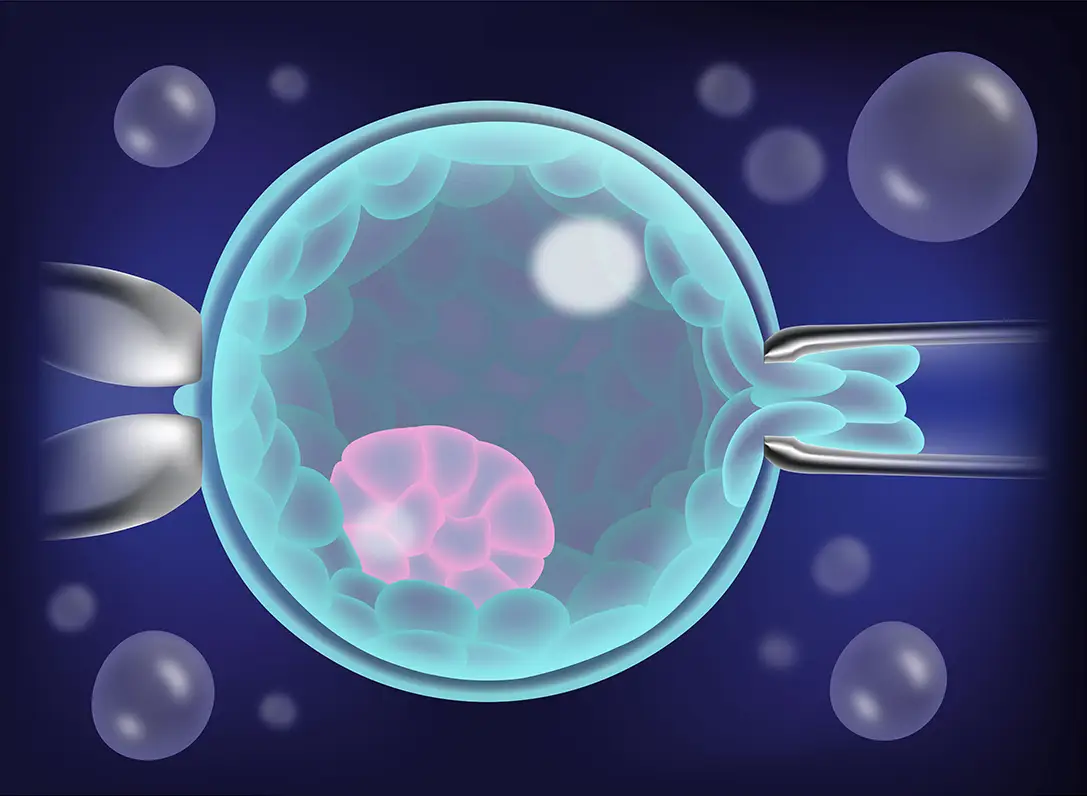
- Trophectoderm biopsy on a day-5 or day-6 blastocyst: 5-10 cells are taken from the trophectoderm. The inner cell mass, which will become the baby, remains untouched.
- Next-Generation Sequencing (NGS) of all 23 chromosome pairs.
- Classification: euploid → transfer, aneuploid → no transfer, mosaic → individualised discussion.
- Transfer is performed in a subsequent cycle after freezing — giving time to study the results.

What the recent evidence shows (2021-2025)
When PGT-A is used properly, the evidence is clear:
- Substantial reduction in miscarriages: across three recent randomised trials, miscarriages fall from 12.6-30.1% to 4.5-13.9%.
- Twofold live birth rate per transfer: 41.5% with PGT-A vs 16.2% without (2.6×).
- 57 days faster to a live birth or to the decision to stop trying: 74 vs 131 days on average.
- Fewer transfers per patient: 1.1 on average with PGT-A vs 1.3 without (15% fewer).
- Better neonatal outcomes in singleton births (meta-analysis of 42 studies, 260,665 participants).
Important clarification: the cumulative live birth rate is not higher with PGT-A — because the euploid embryos would eventually have produced a pregnancy anyway. This does not mean PGT-A is useless. It means it serves a different, equally valuable role: fewer miscarriages, fewer pointless transfers, and a faster path to the baby.
How reliable is it?
- Biopsy concordance with the embryo: 94% for euploid calls (meta-analysis of 26 studies, 1,271 blastocysts).
- Whole-chromosome aneuploid calls (an entire chromosome missing or extra): highly reliable (PPV 97-100%; in one non-selection study, no live births from 102 such transfers). Segmental aneuploid calls (partial chromosomal abnormalities) are less reliable.
- Mosaic calls (5-20% of results): less reliable — these require genetic counselling and case-by-case decisions.
- “No result” (2-6%): uncommon; a repeat biopsy is possible.
When PGT-A is offered
PGT-A is considered in:
- Advanced maternal age (particularly ≥35 years).
- Recurrent pregnancy loss.
- Repeated implantation failure after transfer of good-quality embryos.
- Multiple blastocysts where selection for single embryo transfer is required.
- Couples who want a clear answer before deciding whether to continue trying.
Note: PGT-A used to be considered only for women of advanced reproductive age. Newer data show that even at peak fertility (26-30 years), about 23% of blastocysts are aneuploid — so PGT-A has value across all ages.
In Greece, PGT is subject to genetic counselling and approval by the National Authority for Medically Assisted Reproduction (ΕΑΙΥΑ). For PGT-A on the grounds of advanced reproductive age, the current directive (ΕΑΙΥΑ, 11 Aug 2022) requires a medical note from the treating physician clarifying:
- whether the patient’s own oocytes will be used, or donor oocytes;
- if donor oocytes are used: the donor’s age, whether one or more donors are involved, and whether the licence applies to cryopreserved embryos from that donor or to a fresh cycle.
Under the most recent update (April 2026), the genetic-counselling report supporting a PGT licence may also be signed by a professional with the specialty of Laboratory Genetics.
Summary: questions for your doctor
- Which type of PGT are we talking about — PGT-A, PGT-M or PGT-SR?
- What is the specific indication in our case?
- How many of the embryos are expected to reach the blastocyst stage for testing?
- What happens if the results show mosaicism?
- How will PGT-A change the transfer decision — and what benefit do we expect?
PGT-A is a diagnostic tool, not a treatment. Just as a mammogram does not treat cancer but guides the right treatment, PGT-A does not make an embryo more capable of implanting — it tells us which embryo is worth transferring. When the question is framed this way, its value is clear: fewer miscarriages, fewer pointless transfers, a faster path to the baby.