IVF in women with polycystic ovary syndrome

Polycystic ovary syndrome (PCOS) is the most common cause of infertility in younger women, due to ovulation disorders. With modern medical protocols and the right stimulation strategy, the great majority of women with PCOS can have a child with practically zero risk of serious complications.
What is polycystic ovary syndrome?
Diagnosis requires two of the three Rotterdam criteria: ovulation disorder (oligo- or anovulation), signs of hyperandrogenism (clinical or biochemical), and polycystic ovarian morphology on ultrasound.
When is an ovary considered polycystic?
When ultrasound shows more than 12 small follicles (under 10 mm) or when its volume exceeds 10 cm³. If even one of the two ovaries meets these criteria, the woman has polycystic ovaries.
Why does it cause infertility?
In women with PCOS, although the ovaries contain many small follicles, often none of them matures enough to ovulate. Periods then become sparse or stop, and pregnancy is difficult to achieve.
How does treatment begin?
First-line treatment includes lifestyle changes — increased physical activity and weight loss where needed — which on their own can restore normal ovulation. When this is not enough, the woman can take letrozole orally — an aromatase inhibitor that induces ovulation. According to the current international PCOS guidelines, letrozole outperforms clomiphene citrate in live-birth rates. Metformin may also be added in women with insulin resistance.
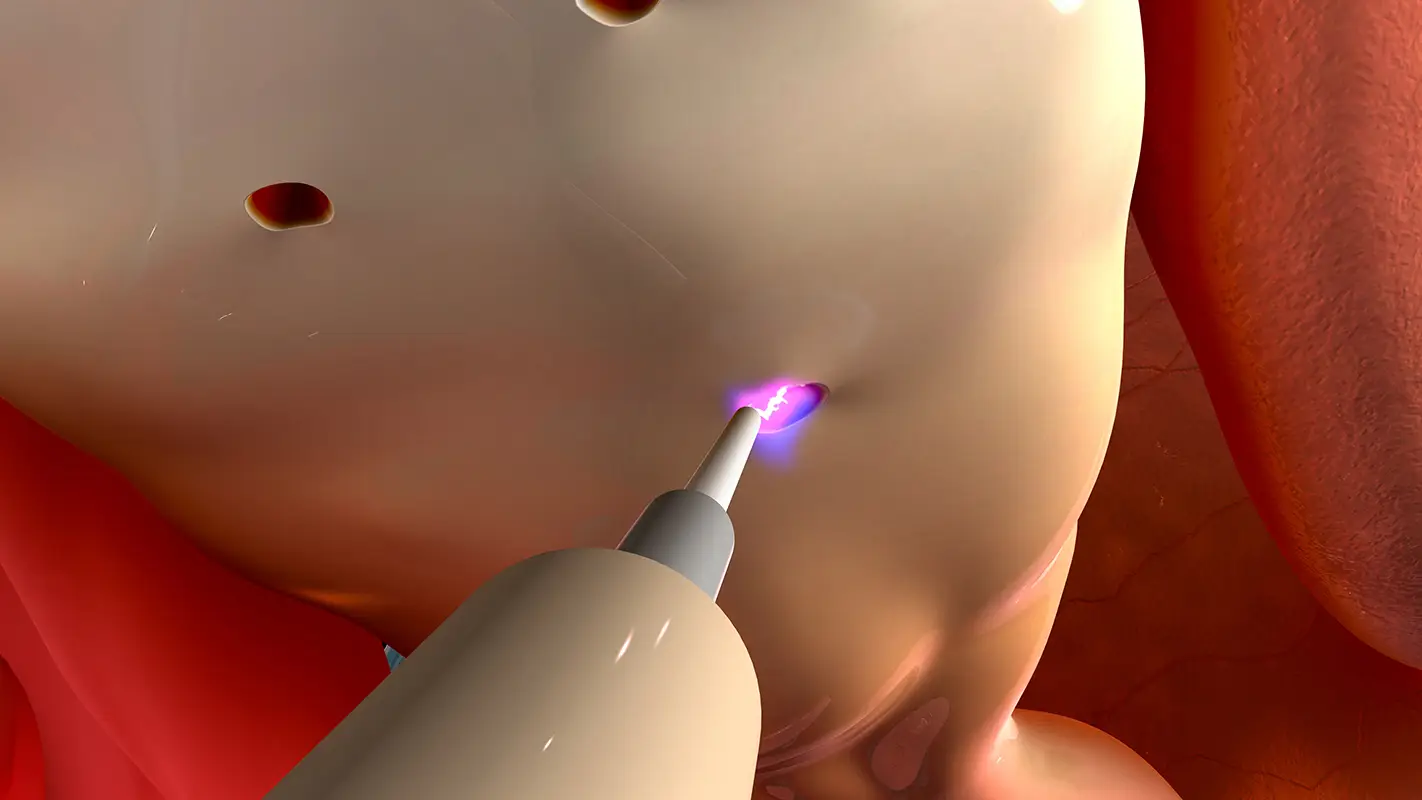
If the above does not result in pregnancy, injectable gonadotrophins (FSH) are used, starting at a low dose with gradual adjustment. Alternatively, in selected cases, laparoscopic ovarian drilling can be performed — a procedure that creates small openings in the ovary with thermal energy.
When do we move to IVF?
When the above steps do not lead to pregnancy after several months, IVF is the next option. In women with PCOS, IVF is particularly effective — provided stimulation is carried out with a modern strategy that eliminates the risk of complications.
What are the specific challenges of stimulation in PCOS?
The PCOS ovary responds to stimulation unpredictably: sometimes excessively (with a risk of ovarian hyperstimulation syndrome, OHSS), sometimes inadequately. That is why the choice of protocol, medication, and trigger is critical.
Which protocol is chosen in PCOS?
In women with PCOS, the final trigger is always given as a GnRH agonist (not hCG), to eliminate the risk of OHSS. Fresh embryo transfer is also avoided in these cases, because pregnancy produces hCG that can re-stimulate the ovaries and cause late-onset OHSS. All embryos are therefore cryopreserved and transferred in a subsequent cycle. In this setting, two protocols are equally acceptable: GnRH antagonist and PPOS (progestin-primed ovarian stimulation). Many centres today prefer PPOS for women with PCOS because it costs less — with no compromise, since transfer takes place in a later cycle anyway.
How is the risk of OHSS eliminated?
The modern strategy practically eliminates the risk of severe OHSS through three steps, applied in either an antagonist or a PPOS protocol: first, use of a GnRH antagonist or a progestin (PPOS) to prevent the premature LH surge during stimulation; second, the final injection 36 hours before retrieval is given as a GnRH agonist (Arvecap, Buserelin) instead of hCG (Pregnyl, Ovidrelle), avoiding the prolonged hormonal stimulation that drives OHSS; third, all embryos are cryopreserved and transferred in a later cycle, once the ovaries have recovered.
Severe OHSS in PCOS can today be practically eliminated. It is no longer an acceptable complication.