Fertility preservation: a patient’s guide
Fertility preservation is a practical option for the woman who wants to preserve her future ability to have children. It is not a treatment but prevention: when her fertility starts to decline — for medical or social reasons — banking eggs, embryos or ovarian tissue today preserves her ability to have a child later.
It is not, however, an elixir of youth: its effectiveness depends critically on the woman’s age at the time of cryopreservation. The earlier it is done, the higher the chances.
When fertility preservation is needed
The reasons are classified as medical or social.
Medical reasons:
- Chemotherapy or radiotherapy for cancer
- Ovarian surgery (cysts, endometriomas) — the removal of part of the ovarian tissue inevitably reduces ovarian reserve
- Family history of premature menopause
- Autoimmune disease requiring ovary-toxic immunosuppression
- Advanced-stage endometriosis
Social reasons:
- No partner at an age when fertility is still high
- Professional or personal reasons for postponing pregnancy
How it is done — the current methods
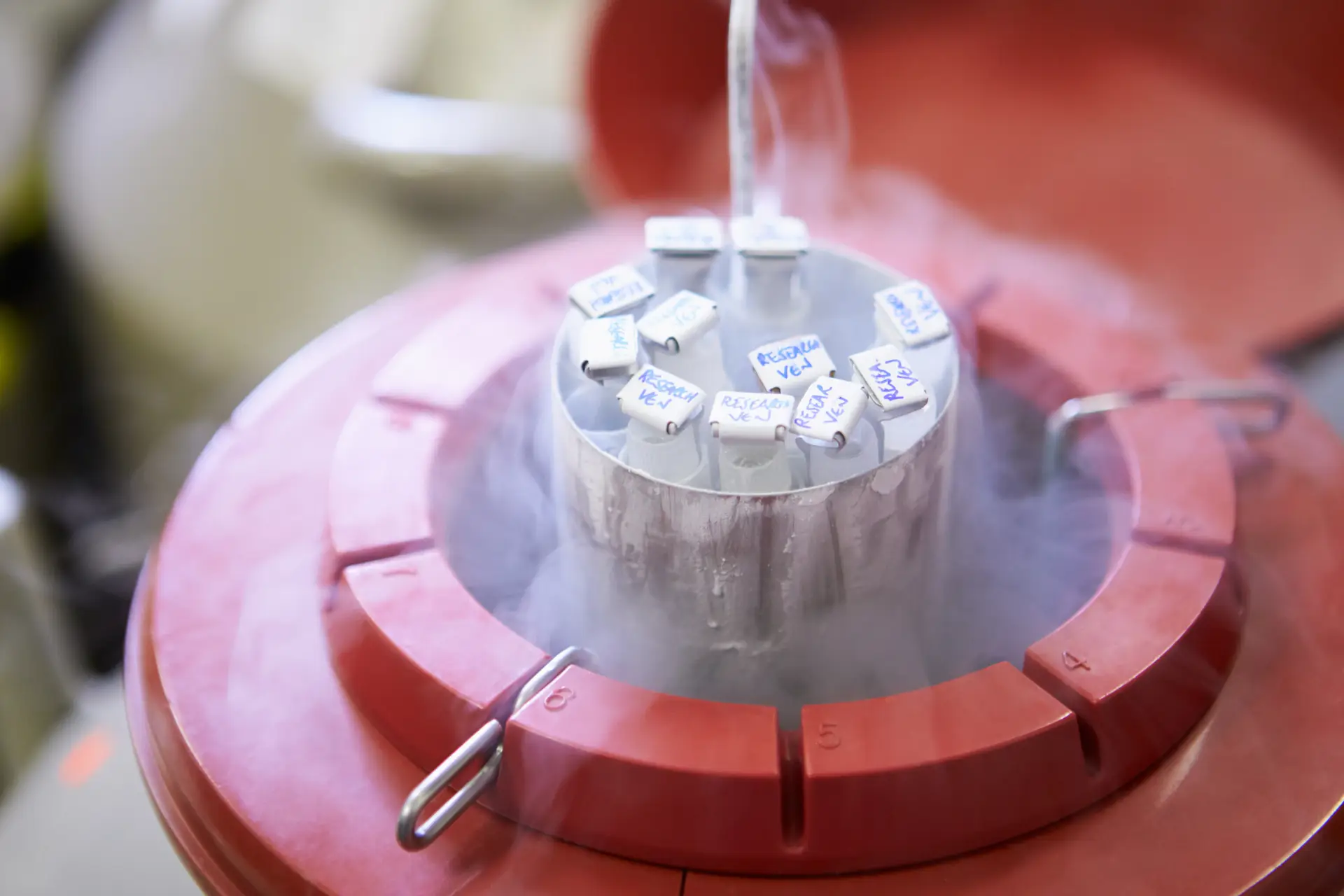
Oocyte cryopreservation (egg freezing). The ovaries are stimulated, mature eggs are collected, and the eggs are frozen by vitrification. Thousands of births have been reported worldwide — the method is no longer considered experimental. It is the option of choice for women without a partner and for those who do not wish to create embryos for ethical or religious reasons.
Embryo cryopreservation. The ovaries are stimulated, the eggs are fertilised in the laboratory, and the embryos are frozen. The oldest and best-documented method — but it requires sperm from a partner or donor.
Ovarian tissue cryopreservation. Part of the ovarian tissue is removed laparoscopically and frozen. It allows for later re-implantation and restoration of ovarian function. According to the most recent international guidelines, the method is now an established procedure and no longer considered experimental. It is the only option for pre-pubertal girls or when there is no time for ovarian stimulation. In some cancers, however, there is a theoretical risk of re-introducing malignant cells through the stored tissue — individualised assessment is required.

Chances of success by age
With modern vitrification, approximately 95% of eggs survive freezing and thawing — the critical factor is now egg quality, which depends on age.
Probability of a live birth per frozen egg:
- Age under 35: 7-8% per egg
- Age 35-37: 5-6% per egg
- Age 38-40: 3-4% per egg
- Age over 40: under 3% per egg
For a realistic 50-60% chance of a live birth, the estimated number of eggs needed:
- Under 35: approximately 10-15 eggs
- 35-37: approximately 15-20 eggs
- 38-40: approximately 25-30 eggs
- Over 40: often requires multiple cycles (egg banking)
For a personalised estimate based on your age, use the egg-freezing calculator on the home page.
When it should be done
Time is the most important variable:
- For social reasons: ideally before 35 — after that, the number of eggs needed rises significantly.
- For medical reasons: as early as possible, ideally before chemotherapy or radiotherapy starts.
- Random-start protocols: modern protocols allow ovarian stimulation to start on any day of the cycle — there is no need to wait for a specific day when time is critical.
Special cases
Breast cancer. In women with hormone-sensitive breast cancer, the co-administration of letrozole with gonadotrophins during stimulation keeps oestradiol levels low, allowing safe egg retrieval without compromising the oncologic treatment. Random-start protocols avoid delaying chemotherapy.
Endometriosis. In women with endometriomas, fertility preservation before surgery is important. Removal of the endometrioma, even with optimal technique, reduces ovarian reserve. Given that 40-45% of women with endometriosis relapse within five years of the first operation, and that 27% will need three or more re-operations, protecting fertility before the first operation is a reasonable choice.
Summary: what to remember
- Fertility preservation is prevention, not treatment — effectiveness depends on age at the time of cryopreservation.
- Reasons can be medical or social — both reasons are equally important.
- The methods (egg, embryo, ovarian tissue freezing) are now established, not experimental.
- Time is the most important factor — the earlier it is done, the fewer eggs are needed.
Questions for your doctor
- Given my age and ovarian reserve, which method is most appropriate for me?
- How many eggs do I realistically need for a reasonable chance of a live birth?
- How many egg retrievals may I need?
- Is there a medical reason to use a random-start protocol?
- What is the cost, and when is it covered by insurance?
Fertility preservation does not stop the biological ageing of the ovaries — but it allows a woman to have a child in the future. The earlier it is done, the better — ideally before the age of 35.