How can IVF treatment be simplified?
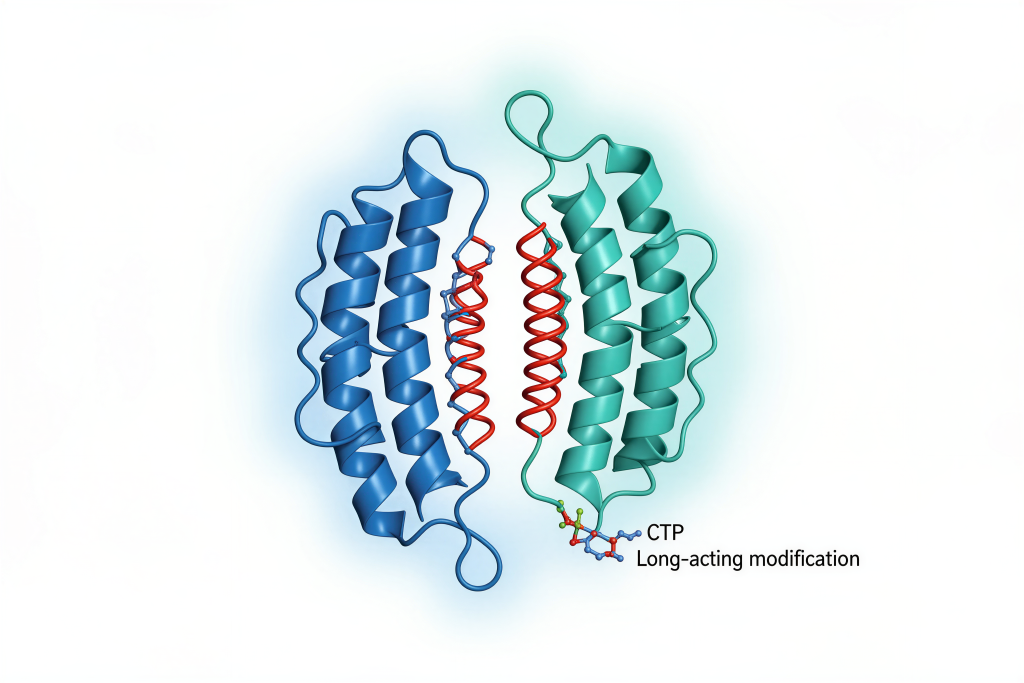
FSH is the hormone responsible for developing one follicle each month. In IVF we need several, so the woman takes daily FSH injections for about 10 days. With long-acting FSH, the first 7 injections become one.
What is long-acting FSH?
Long-acting FSH (corifollitropin alfa, ELONVA) gradually releases FSH over 7 days after a single subcutaneous injection. During that week the woman needs no further injections. Seven daily injections are therefore replaced by one. The dose is 100 mcg for women weighing up to 60 kg and 150 mcg for women over 60 kg.
How does it simplify IVF?
Beyond reducing the number of injections, long-acting FSH also reduces the risk of errors in daily self-injection. In around one in three women, no additional injections are required after the seven-day window: the single injection is enough until oocyte retrieval. The remaining women need additional daily FSH injections for 2-3 days after the first week, until the follicles mature.
Who is it for?
Long-acting FSH can be given to any woman undergoing IVF who wants to reduce the total number of injections. It is combined with a GnRH antagonist protocol — or with a PPOS protocol when no fresh embryo transfer is planned (oocyte or embryo cryopreservation).
Who should not receive it?
It is avoided in women at increased risk of excessive ovarian response: polycystic ovary syndrome; a history of ovarian hyperstimulation syndrome; more than 20 small follicles at the start of treatment; or a previous cycle in which more than 30 oocytes were retrieved. In these women daily FSH is preferred, so the dose can be adjusted day by day and control maintained.
Is it effective?
This equivalence has been confirmed by two large studies. The ENGAGE trial (2009, 1,506 women) showed that in women aged 18-36 long-acting FSH gives the same live-birth rate as daily FSH. The PURSUE trial (2014) confirmed the same in women aged 35-42. Long-acting FSH is now an established option in major reproductive medicine centres worldwide.
Is there a risk of hyperstimulation?
The risk of ovarian hyperstimulation syndrome (OHSS) exists with any stimulation regimen, whether daily or long-acting FSH. The available data do not show a meaningful difference in OHSS incidence between the two. OHSS prevention rests on three things: appropriate patient selection, individualised drug dosing for each woman, and the antagonist or PPOS protocol — both of which in high-risk patients allow triggering with a GnRH agonist instead of hCG.
Long-acting FSH replaces the first 7 injections with one, without reducing effectiveness. A friendlier IVF, for the right patients.