Fresh or frozen embryo transfer

In conventional IVF, after oocyte retrieval and fertilisation, the best embryos are selected for immediate transfer to the uterus — the so-called “fresh” cycle. The remaining good-quality embryos are cryopreserved, so they can be transferred in a later thaw cycle if the fresh transfer does not result in pregnancy.
According to the data published by the large international IVF registries, the average pregnancy rate after a fresh-cycle embryo transfer is approximately 29%. A subsequent frozen-thaw transfer adds roughly 8% to the couple’s cumulative chance of pregnancy.
On the basis of these numbers alone, a superficial reading would conclude that fresh transfer is preferable. The comparison is, however, misleading: in conventional practice the embryos transferred in frozen cycles are by definition the ones not chosen for the fresh transfer — the lower-quality embryos. When the same embryos are evaluated under modern methodology — single embryo transfer, with or without PGT-A — the real “fresh versus frozen” comparison looks different.
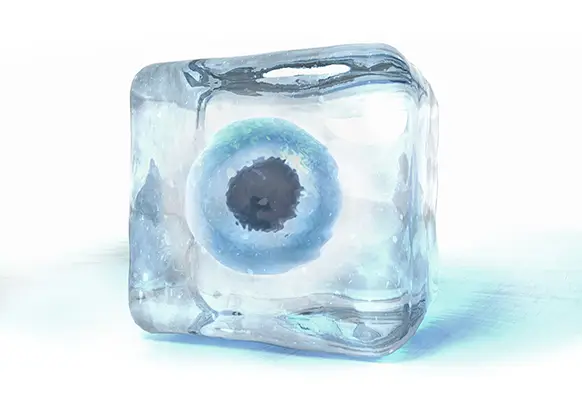
How has embryo cryopreservation evolved?
Earlier cryopreservation used slow freezing, with embryo survival rates after thaw of around 70%. The modern method of vitrification has raised survival rates to 95–99%. This advance is what made the “freeze-all” strategy practically viable — a strategy in which all embryos are cryopreserved and transferred in a subsequent cycle, rather than in the same stimulation cycle.
Does ovarian stimulation affect endometrial quality?
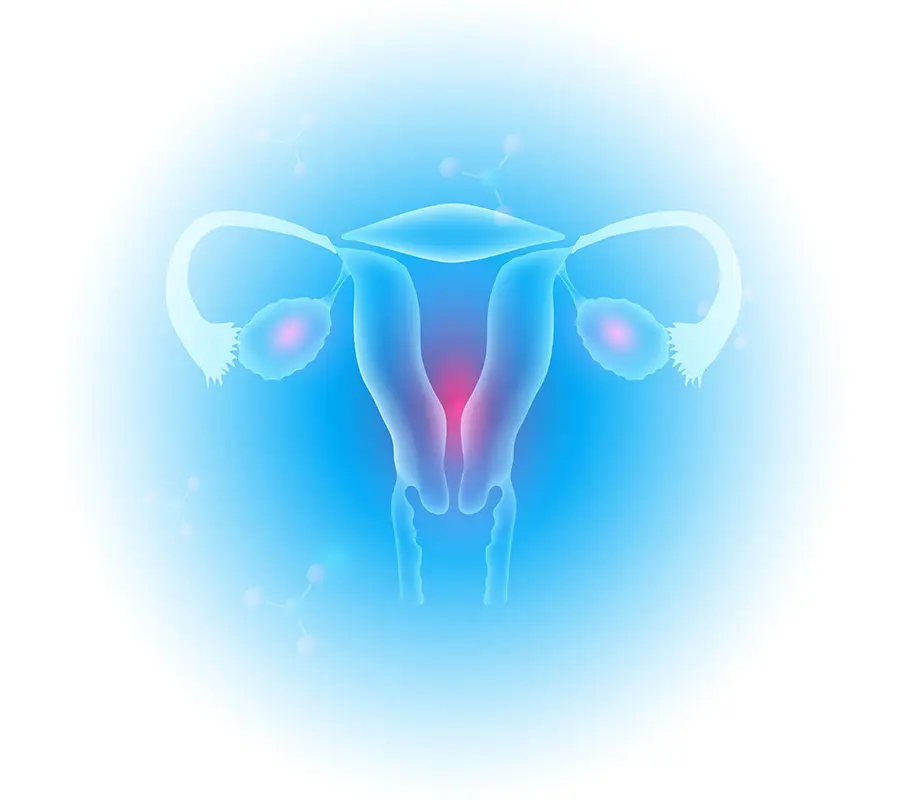
It is now well established that ovarian stimulation produces a non-physiological endometrium at both the histological and the gene-expression level, regardless of the type of stimulation used. In a subsequent frozen-thaw cycle, the endometrium does not carry the consequences of that pharmacological exposure, and implantation takes place in a more physiological environment.
Is frozen-thaw transfer always preferable to fresh transfer?
The answer is not a simple “yes” for every patient. From the major randomised trials published in recent years, in women with polycystic ovary syndrome (PCOS) the freeze-all strategy significantly increases the live-birth rate (Chen 2016 NEJM; Wei 2019). By contrast, in women with normal ovarian response, live-birth rates are similar between freeze-all and fresh transfer (Shi 2018 NEJM; Vuong 2018 NEJM). In women with excessive ovarian response or elevated progesterone on the day of triggering, fresh transfer is associated with reduced implantation, and freeze-all has the advantage.
When is the freeze-all strategy recommended today?
The main indications are: risk of ovarian hyperstimulation syndrome (OHSS); polycystic ovary syndrome or high response to stimulation; planned preimplantation genetic testing (PGT-A), where freezing is needed to allow time for laboratory analysis; elevated progesterone on the day of triggering; a history of previous failed fresh-cycle transfers; and uterine findings during the stimulation cycle (polyp, fluid, thin endometrium).

How is the endometrium prepared for the frozen-thaw cycle?
Two protocols are in use. In a natural FET cycle, transfer is timed to the woman’s natural ovulation. In a programmed (hormone-replacement, HRT) FET cycle, the endometrium is prepared by administering oestradiol and progesterone. Recent data show that the natural cycle is associated with a lower risk of hypertensive disorders of pregnancy, and is preferred when the woman has regular, ovulatory cycles.
Do pregnancies from frozen-thaw transfers differ from those from fresh transfers?
Pregnancies arising from frozen-thaw transfer, compared with pregnancies after fresh transfer, are associated with a lower probability of intrauterine growth restriction, a lower probability of low birth weight (under 2,500 g), a lower probability of preterm delivery (under 37 weeks), and lower perinatal mortality. At the same time, there is an increased probability of a large-for-gestational-age baby (LGA) and — particularly with the programmed FET protocol — an increased risk of hypertensive disorders of pregnancy and pre-eclampsia. For this reason, the natural FET cycle is preferred whenever feasible.
Modern practice does not choose between “fresh” and “frozen” universally — it chooses on a case-by-case basis, taking into account ovarian response, progesterone on the day of triggering, the endometrium, and whether PGT-A is planned.

Summary.
The transition from slow freezing to vitrification has fundamentally changed the picture of embryo cryopreservation. In women with PCOS, a high response, elevated progesterone, or planned PGT-A, the freeze-all strategy is preferable. In women with a normal response and none of those indications, fresh and frozen-thaw cycles produce similar live-birth rates — and the choice is made on the basis of the obstetric benefits of the frozen cycle weighed against its risks (LGA, hypertensive disorders with the programmed protocol). When a frozen-thaw cycle is used, the natural-cycle protocol is preferred over the programmed protocol whenever feasible.